Difference Between Multi-threading and Hyperthreading | Explained

Well, this blog will help you in understanding both these concepts individually.
Multithreading
Multithreading in technical language is a general task of running more than one thread of execution within an Operating System (OS). In a more common language, it can be understood as ‘multiprocessing.’
For example, if you’re currently on your windows or iOS laptop and you’re running Microsoft Word and Google Chrome simultaneously, it can explain the concept of multiple threads within the system.
So, you can easily refer to multithreading as multiprocessing.
All in all, multithreading is a software concept. On practical grounds, any Turing-complete CPU can perform multithreading. This stands true even when the computer comes with a single CPU core and does not support hyperthreading (will learn about it in the next section).
Here, threads are sequences of instructions, which are to be run by the CPU core.
Note: In case you’re searching for a reliable shared multithreading RDP service. Get it at 99RDP!
What does Turing-complete CPU mean?
A Turing-complete CPU is a system in which a program can be written to find an answer. So, if I say that my program is Turing complete, that means the program is ready to solve the required computation problem.
How does a CPU operate to execute multiprocessing?
To support and execute the tasks under multiprocessing, the CPU will interleave the execution of different threads, and then run the tasks one by one by dividing up the available time into slices. This division of time is roughly or mostly divided equally and distributed among threads. Only if any task of some higher priority arises, the time would be divided unequally, giving the luxury of executing the more top priority task primarily.
Hyper-Threading
Hyper-threading was first introduced by Intel to introduce parallel computation in Personal Computers. Likewise, it was first employed on desktop CPUs with the Pentium 4 in 2002.
It basically refers to a specific hardware technology that lets a single processor core to interleave multiple threads of execution more efficiently.
Basically, intel introduced hyper-threading to increase the performance of the CPU core by enabling multiple threads running in the CPU core. That means the CPU can efficiently run various applications smoothly.
Core: CPU core is a unit that reads and executes instructions.
Now you can quickly tell the difference between single-core and double core, right! A dual-core CPU will have tow physical processing units on a single chip.
Now, hyperthreading virtually doubles the number of cores that are present on the CPU.
So, when a dual-core CPU is hyperthreaded, the OS will see a total of four cores within the chip. However, you must not, that hyperthreading does increase these cores ONLY virtually or logically.
Now, OS will schedule or share the workload between them.
With hyper-threading, the OS can increase the number of independent instructions in the pipeline. Doing this will eliminate any idle time on the CPU, which makes the computer run faster and more efficiently.
Note: In case you’re searching for a reliable full admin dedicated RDP service. Get it at 99RDP!
Multi-threaded Execution on CPU: How It Works in Performance
When we talk about processors for PCs , it is very common to talk about the number of cores and the processing or execution threads, which are generally double the number of cores because HyperThreading technologies in the case of Intel and SMT in the case of AMD what they do is that each core can execute two simultaneous tasks. However, that is a somewhat simple way to explain how multithreading works on a processor, and in this article what we are going to do is explain it to you in greater detail so that you can understand all its ins and outs.
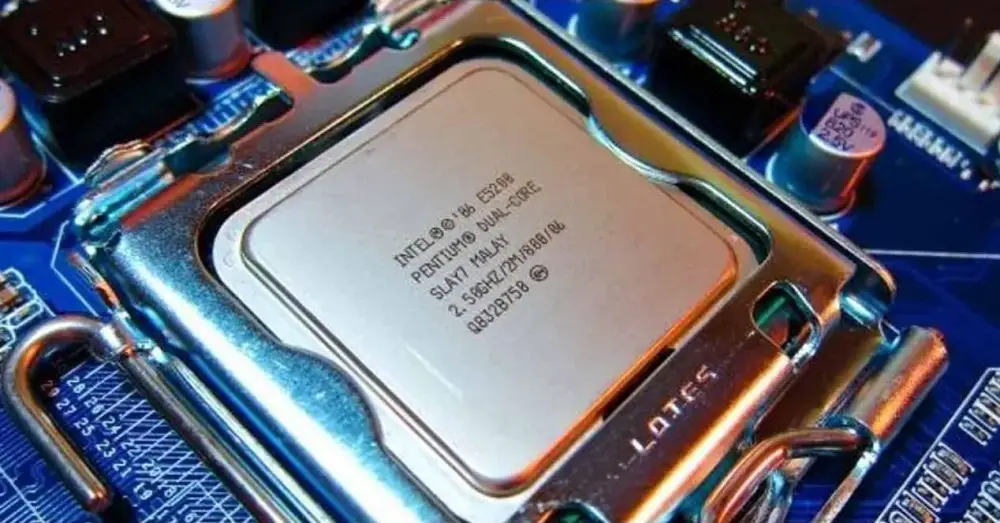
That said, we all know that a processor that has more threads than cores is capable of running more tasks simultaneously, and in fact, the operating system detects the processor as if it actually had as many cores as there were threads. For example, an Intel Core i7-8700K has 6 cores and 12 threads thanks to HyperThreading technology, and Windows 10 recognizes it as a 12-core processor as is (although it is true that it calls them “logical processors”) because for the operating system, its operation is completely transparent.
What is multi-threaded processing?
In computer architecture, multi-threaded processing is the ability of the central processing unit (CPU) to provide multiple threads of execution at the same time, supported by the operating system. This approach differs from multiprocessing and should not be confused; In a multithreaded application, threads share the resources of one or more processor cores, including compute units, cache, and the translation search buffer (TLBL).
Please enable JavaScript
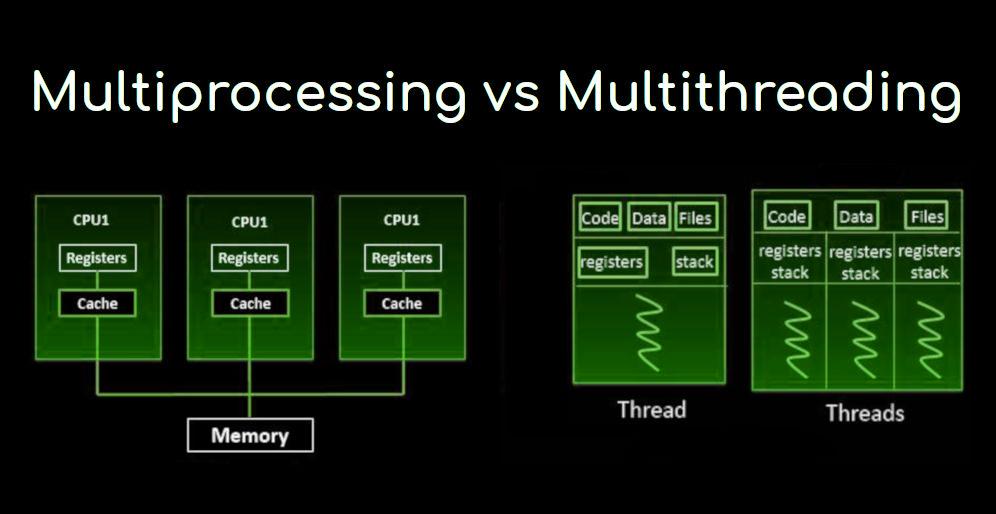
When multiprocessing systems include multiple complete processing units on one or more cores, multiprocessing aims to increase the utilization of a single core by using thread-level parallelism as well as instruction-level parallelism. Since the two techniques are complementary, they are combined in almost all modern system architectures with multiple multi-threaded CPUs and with multi-core CPUs capable of operating with multiple threads.
The multi-threaded paradigm has become more popular as efforts to exploit instruction-level parallelism (that is, being able to execute multiple instructions in parallel) stalled in the late 1990s. This allowed the concept of performance computing emerged from the more specialized field of transaction processing.
Although it is very difficult to further accelerate a single thread or program, most computer systems are actually multitasking between multiple threads or programs and therefore techniques that improve the performance of all tasks result in performance gains. general. In other words, the more instructions a CPU can process at the same time, the better the overall performance of the entire system.
Even multi-threaded processing has disadvantages
In addition to performance gains, one of the benefits of multi-threaded processing is that if one thread has a lot of cache errors, the other threads can continue to take advantage of unused CPU resources, which can lead to faster overall execution. as these resources would have been idle if only a single thread had been running. Also, if one thread cannot use all the CPU resources (for example, because the statements depend on the result of the previous one), running another thread can prevent these resources from going idle.
However, everything also has its negative side. Multiple threads can interfere with each other by sharing hardware resources, such as cache or translation search buffers. As a result, single-threaded execution times are not improved and may degrade, even when only one thread is running, due to lower frequencies or additional pipeline stages that are required to accommodate process switching hardware.
Overall efficiency varies; Intel says its HyperThreading technology improves it by 30%, whereas a synthetic program that only performs one cycle of non-optimized, dependent floating-point operations actually receives a 100% improvement when run in parallel. On the other hand, hand-tuned assembly language programs that use MMX or AltiVec extensions and pre-search for data (such as a video encoder) do not suffer from cache leaks or idle resources, so they do not benefit from a run at all. multi-threaded and may actually see their performance degraded due to share contention.
From a software point of view, the multi-threaded hardware support is fully visible, requiring further changes to both the application programs and the operating system itself. The hardware techniques used to support multithreaded processing are often parallel to the software techniques used for multitasking; Threading scheduling is also a major problem in multithreading.
Types of multi-thread processing
As we said at the beginning, we all have the conception that multi-threaded processing is simply process parallelization (that is, executing several tasks at the same time), but in reality things are a bit more complicated than that and there are different types multi-thread processing.
Multiple “coarse-grained” threads

The simplest type of multithreading occurs when a thread runs until it is blocked by an event that would normally create a long latency lock. Such a crash could be a lack of cache that has to access memory off-chip, which can take hundreds of CPU cycles for the data to come back. Instead of waiting for the crash to resolve, the processor will switch execution to another thread that was already ready to run, and only when the data from the previous thread has arrived will it be put back into the ready-to-run threads list.
Conceptually, this is similar to cooperative multitasking used in real-time operating systems, in which tasks voluntarily give up processor runtime when they need to wait for some kind of event to happen. This type of multithreading is known as “block” or “coarse-grained.”
Interleaved multithread
The purpose of this type of multi-threaded processing is to remove all data dependency locks from the execution pipeline. Since one thread is relatively independent of others, there is less chance that an instruction in a pipeline stage needs an output from a previous instruction in the same channel; Conceptually, this is similar to the preventative multitasking used in the operating system, and an analogy would be that the time interval given to each active thread is one CPU cycle.
Of course, this type of multi-threaded processing has a main disadvantage and that is that each pipeline stage must track the thread ID of the instruction it is processing, which slows down its performance. Also, since there are more threads running at the same time in the pipeline, the shares such as the cache must be larger to avoid errors.
Parallel multithreading
The most advanced type of multithreading applies to processors known as superscalars. Whereas a typical superscalar CPU issues multiple instructions from a single thread on each CPU cycle, in simultaneous multi-threaded processing (SMT) a superscalar processor can issue instructions from multiple threads on each cycle. Recognizing that any thread has a limited amount of instruction-level parallelism, these multithreading attempts to exploit the parallelism available across multiple threads to reduce waste associated with unused spaces.
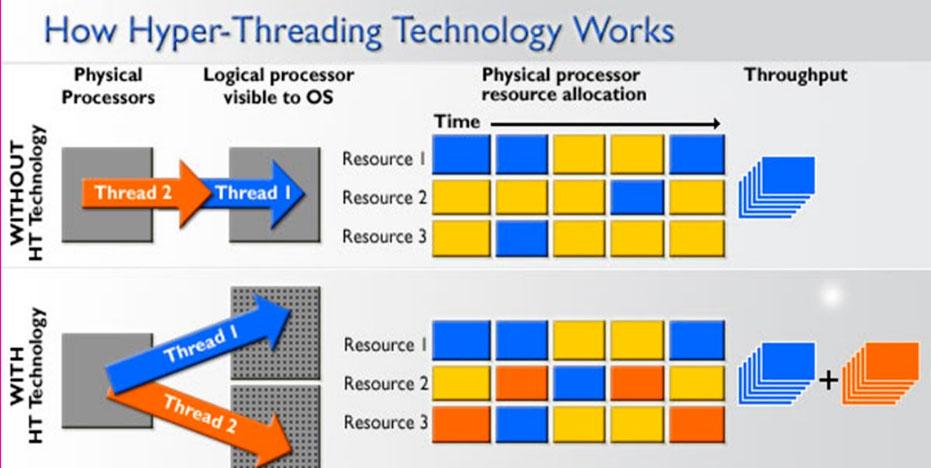
To distinguish the other types of SMT multithreaded processing, the term “temporary multithreaded” is often used to indicate when single-threaded instructions can be issued at the same time. Implementations of this type include DEC, EV8, Intel’s HyperThreading Technology, IBM Power5, Sun Mycrosystems UltraSPARC T2, Cray XMT, and AMD’s Bulldozer and Zen microarchitectures.
What is a Multi-threaded CPU
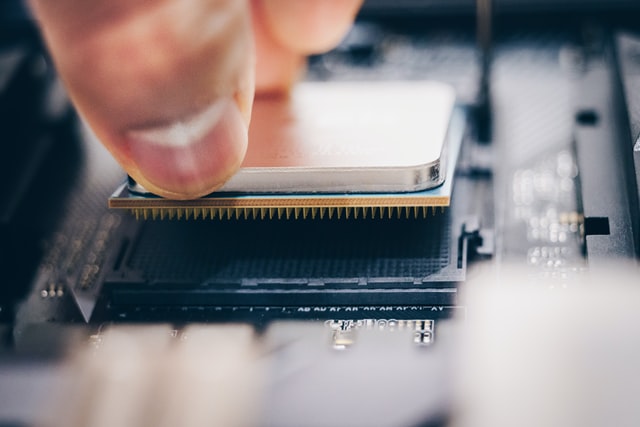
When discussing CPU specifications, enthusiasts would often mention and give high priority to a specific product’s core and thread count. In most cases, you would hear thread values that are double the amount of cores. But sometimes, you would also hear values that are just equal to the number of mentioned cores.
Regardless, without any other context, it would seem that the more cores and threads, the better the CPU choice is. After all, positive specs usually give better results (therefore better possible performance) when the number gets higher and higher.
But… what is even a thread in the first place? And why are multi-threaded CPUs the norm?
Table of Contents
What is Even a Thread, How Do They Work?
Before explaining how threads work in a CPU, we need to explain a bit how cores themselves work. In principle, you can think of a core as a processing line, where sets of binary information (instructions) are processed line per line. Everything that would make a PC work, such as launching a software program, reading information on a hard drive, retrieving data from RAM, requires processing data through calculations and instructions, and so it all passes through a CPU’s core.
Supporting the core is its set of “sub-cores.” These are splits in the processing line that allows a single core to logically work on more instructions per unit of time. These are the ones that we call threads. Given an ideal workload that can be split-equally, a core that can split instructions into two threads would theoretically be faster than a core that works on just one thread. At the very least, it can provide a bigger effect on overall performance than the rest of the other CPU specifications such as clock frequency and cache allocation.
In most CPU designs, each core of a CPU would usually be designed with only two threads. A hypothetical core with more than two threads is certainly possible. But because threads are essentially only virtual cores, creating more of them in a single physical core introduces far more complexity to the architecture, outweighing the performance benefit it could provide.
Advantages of Higher Thread Counts
Naturally, multi-threaded CPUs have a variety of different advantages, most of which are based solely on improvements on parallel processing that each of the main cores themselves could provide:
- Faster processing times for certain software – if you using software such as Blender or advanced emulators, then having multi-threaded CPUs of high capacity can immensely speed up your PCs processing loads, and therefore, potential productivity/enjoyment.
- Better multitasking for background tasks – smaller programs in the background can eat up a good amount of CPU use percentage when they pile up together. With a multi-threaded CPU, these percentages can be mitigated, or even eliminated.
- Provides smoother gaming experience on CPU-intensive games – games such as Shadow of the Tomb Raider, Kingdom Come Deliverance, and Red Dead Redemption 2 occasionally incur frame lag spikes when using lower-end CPUs that have the same number of cores and threads. This becomes so much less of a problem for multi-threaded CPUs, even for entry-level ones like the Core i3-10100F.
- Effective streaming without causing screen stutters for your audience – those not using Turing/Ampere NVENC, or would like advanced-level option flexibility for streaming, may find it way easier to use multi-threaded CPUs.
Introduction to Multi-Threading Technologies
Indeed, we have stated that higher threads mean higher potential performance. But the bulk of the driving force that actually makes multi-threaded CPUs such efficient parallel processing machines for compatible software, is due to specific multi-threading technologies. For the most part, these features allow threads to more dynamically segregate instructions, what is typically described as “better allocation of resources” that are fed into modern processor architectures:
Hyperthreading – developed by Intel as early as the first decade of 2000s with the introduction of its very first Core series CPU lineups. According to Intel’s official description, Hyperthreading IS simply multi-threading itself, albeit a modern version of one. Thus, it is sprinkled with more design quirks, such as better concurrent scheduling.
Simultaneous Multi-threading (SMT) – AMD has also developed its semi-modern version of multi-threading in the form of SMT as far back as the Bulldozer era (2011+), although its latest iteration in Zen architecture presents a far more efficient strategy of processing parallel instructions per available thread.
In practice, though, especially when comparing CPU generations of only a year or less apart (Intel 9th Gen vs Ryzen 2000, Intel 10th Gen vs Ryzen 3000, etc.), Hyperthreading and SMT might as well be the exact same thing.
Should You Care (More) About Multi-Threaded CPUs?
In the current era of (gradually) more efficient software processing? And assuming that your CPU of choice is of a recently modern design architecture or generation?
But only in consideration with CPU workloads, usage situations, and applications that would actually make efficient use of multi-threading.
Modern professional work that requires heavy CPU usage is usually the best excuse strategic reason that you can have to splurge on your savings and go for almighty Core i9’s and Ryzen 9’s. This perhaps is also true if you are a heavy multi-tasker. For example, if you are a streamer that does a bunch of other (heavier on the side) tasks on your machine while playing triple-A titles. Though, in those cases, a Core i7 or Ryzen 7 might better suit your high-spec needs.
But if you only want a dedicated gaming machine, 12 threads (for 6 cores) is the technical economic maximum. Even for so-called “future-proofed” systems, going for 16 threads (for 8 cores) or higher is just absolutely overkill. With the current arms race between Intel and AMD, newer design architectures would usually catch up and outperform your “future-proofed” system anyway, even before you can make good use of those threads in gaming.
And for the regular, trusty ol’ office machine? You people only really need to worry about having a current-generation CPU, and if it has at least four cores.
Introduction to Processing Techniques

Most CPU manufacturers try to achieve high CPU performance by increasing clock speed and cache sizes but that still does not let full potential utilization of CPU power. To make more efficient use of CPU power, multiple enhancements have been made over a period in CPU processing techniques to increase the processing power and optimize the utilisation of CPU / processors.
Today, we look at two techniques related to processing – Hyper Threading and Multi-Threading, and understand the key differences between them, their limitations, advantages, usage etc.
About Hyper-Threading
Hyper Threading technology allows a single processor to operate into two separate processors for the operating system, the applications and the programs using it. The physical processor is divided into two logical or virtual processors. The Hyper Threading technology was designed to enhance the performance of CPU. The amount of work performed by a CPU within a unit of time , core is the execution unit of CPU and Hyper Threading allows multiple threads to run on each core of CPU. More and more cores were added to CPU by manufactures to increase instructions executed by the CPU at a time.
Each physical core is recognized as two virtual or logical cores by operating system. A single processor runs two threads. Cores are increased virtually or logically, and they work independently. A Hyper Threading enabled CPU has 2 set of general-purpose registers, control registers, architecture components and they share same cache, bus, and execution units.
Origin of Hyper-Threading
Hyper threading technology was developed by Intel. It is the marketing name which is around since x86 realm. The idea behind this Simultaneous Multi-Threading (SMT) was that the single physical CPU appears to the Operating system as two virtual or logical processors. Hyper threading was officially announced at the Intel developer Forum and it was demonstrated on a Xeon processor. The test demonstrated that Single Xeon with Hyper threading enablement was 30% faster than normal Xeon processor.
How Hyper-Threading works?
Hyper Threading provides Thread level parallelism (TLP) for each processor to provide increased utilization of processor and resources.
Single processor is represented as two virtual or logical processors to the operating system. The processor works on two set of tasks simultaneously and utilizes resources which otherwise would be idle and helps to get more work done in same time window.
Multithreaded software divides workloads into processes and threads which can be independently executed, dispatched, and scheduled.
Hyper Threading allows a single Pentium 4 processor to function as two virtual or logical processors.

About Multi-Threading
Multithreading allows to create multiple threads within a single process to enhance throughput of computing. When processes are created for each task, it is resource consuming and intensive so Multi-Threading technology allows to divide a single process into multiple sub-processes and assign tasks to each sub-process or thread. Each thread is a lightweight process. There are two types of threads – Kernel thread and User thread.
- Kernel level threads are easy to manage but slower to create, Operating system supports creating of kernel threads. They are specific to operating system and Kernel level routine can be multi-threaded.
- User threads are easier to manage and create. They are implemented by a thread library at user level, is generic and can run on any operating system. They can’t take advantage of multiprocessing.
Different Models of Multi-Threading
There are many models of multi-threading : –
- Many to one model – Several user threads map to single kernel thread.
- One to one model – A single user thread is managed by each kernel thread.
- Many to many models – Several user threads are mapped to similar or small amount of kernel threads.
Origin of Multi-Threading
Multi-threading was first originated in 1950, however simultaneous multi-threading was part of IBM ACS-360 project in 1968. The first major processor was developed using SMT known as Alpha 21464(EV8).
How Multi-Threading works?
A Thread is a sequence of statements which are executed as part of program. Each program has one thread for execution. Multithread programs simultaneously execute two or more threads. The operating system provides multithreading support and quickly switches the CPU system between running threads. The operating system which assigns thread to CPU is called a ‘Scheduler’.
Execution of thread can be Concurrent and Parallel.
- In Concurrent execution, a Single processor switches execution processes between threads in a multi-threaded process.
- In Parallel execution, each threat in a process can run on a separate processor.

Hyper-Threading vs Multi-Threading
Below table summarizes the differences between the two technologies:
Parameter
Hyper-Threading
Multi-Threading
Download the comparison table: Hyper-Threading vs Multi-Threading